

Choosing the best LED linear module supplier in China is not simply a price comparison. The right partner must deliver stable light output, consistent color, and modules that fit the intended fixture. A specification sheet can look convincing. Real confidence comes from checking samples, test records, and production controls. Buyers should compare lumen output, color temperature, CRI, thermal design, and driver compatibility before requesting a quotation. Small mismatches can become visible across a long illuminated run.
Supplier experience matters, but it should be demonstrated through relevant projects, not broad claims. Ask how the company controls LED binning, soldering quality, and inspection at each production stage. Request clear answers about customization, minimum order quantities, lead times, packaging, and warranty coverage. If a supplier shares measurable test data and explains its limits, that is useful evidence. If answers remain vague, pause. Price alone is a weak signal.
This guide examines practical ways to assess Chinese manufacturers and trading companies, including product range, engineering support, communication, quality assurance, and after-sales service. It also considers what buyers can verify independently, such as sample performance and documentation, before placing a larger order. No supplier is best for every application. Needs differ. A warehouse aisle, office ceiling, and retail display can demand different optics and operating conditions. A careful process can still miss something, so keep checking details against the actual project.
What Is the Best LED Linear Module Supplier in China?
What Is an LED Linear Module?
An LED linear module is a slim lighting assembly designed to produce a continuous line of light. It typically combines LEDs mounted on a circuit board with electrical contacts and, in some designs, a lens or diffuser. The board helps position the LEDs and transfer heat. A driver may be built in, but it is often supplied separately. Check the product specifications rather than assuming.
Modules come in different lengths, light outputs, color temperatures, and connection styles. They are used in fixtures for offices, retail spaces, workshops, and display cabinets. For example, a frosted cover can soften visible LED points above a workbench. The right module depends on the fixture, operating conditions, and desired light distribution. A module can look suitable on paper yet perform poorly if its driver or thermal design is mismatched. Even experienced buyers can overlook this detail.
Tips: Confirm the module’s voltage, current, dimensions, and driver compatibility before ordering samples. Ask for test data, and inspect the light in your actual fixture. Supplier claims are useful, but measurements matter. One caveat: a sample may not reflect every production batch.
An LED linear module is an elongated assembly of LEDs and circuitry, often used in linear luminaires. Common nominal white-light color temperatures include 2700 K, 3000 K, 4000 K, 5000 K, and 6500 K. These values describe the light’s appearance, from warm to cool; availability varies by product.
What Is the Best LED Linear Module Supplier in China?
How Are LED Linear Modules Designed and Used?
An LED linear module combines light-emitting diodes, a circuit board, thermal management, and often a diffuser. Designers arrange the LEDs along a strip to create an even line of light. An aluminum-core board helps move heat away from the components. A constant-current driver supports stable operation, while the diffuser softens visible dots. Small details matter.
Designers select color temperature, color rendering, beam angle, and module length for the space. Offices may need low-glare, consistent illumination; shelves often benefit from narrow, directed light. The U.S. Department of Energy’s 2020 U.S. Lighting Market Characterization estimated that LEDs made up about 47% of installed lighting stock. That scale reflects their broad adoption, but it does not mean every module performs equally well.
In use, modules fit into channels, fixtures, display cases, and architectural coves. Check heat performance in the actual housing, not only on an open test bench. A sealed channel can trap heat. Easy to overlook. Also confirm driver compatibility, measured output, and color consistency between batches. A supplier’s data sheet helps, but a sample test under real operating conditions is more convincing. One compromise remains: higher output can mean more heat, so the brightest option is not always the best choice.
| Evaluation Area | Typical Data or Design Practice | Why It Matters | What to Check with a Supplier |
|---|---|---|---|
| LED module format | Rigid linear boards, flexible strips, and board segments with designated cut points are common formats. | The format affects installation, bending limits, mechanical support, and whether the module fits the luminaire channel. | Request dimensional drawings, cut-point spacing, connector details, and installation instructions. |
| Electrical input | Many modules use constant-voltage 12 V or 24 V DC; other designs use a compatible constant-current LED driver. | The module and driver must be electrically matched to avoid poor performance or premature failure. | Confirm input type, operating voltage or current, power per metre, polarity, and recommended driver specifications. |
| Light output and efficacy | Product efficacy varies by LED package, drive current, optics, colour temperature, and thermal design. Compare measured lumens per watt for the complete module. | A higher module-level efficacy can reduce energy use for a given light output, but should be considered alongside colour quality and lifetime. | Ask for a dated photometric report that states test conditions, input power, luminous flux, and efficacy. |
| Colour temperature and rendering | Common CCT options include 2700 K, 3000 K, 4000 K, 5000 K, and 6500 K. CRI 80 or higher is widely used; CRI 90 or higher is available for colour-sensitive settings. | CCT determines the perceived warmth of the light, while CRI indicates how faithfully colours are rendered compared with a reference source. | Specify CCT, CRI, colour tolerance, and any special red-rendering requirement. Request test data for the actual configuration. |
| Board and thermal design | Aluminium-core PCBs are commonly used where heat needs to transfer from the LEDs to a metal luminaire body or heat sink. | Excessive operating temperature can reduce light output and shorten component life. | Check PCB construction, recommended mounting surface, maximum operating temperature, and thermal-test conditions. |
| Dimming and control | Depending on the driver and module design, dimming may use PWM, 0–10 V, DALI, or another compatible control method. | Compatibility affects dimming range, flicker behaviour, and integration with building controls. | Verify the exact driver-control combination, dimming range, and flicker test results rather than relying on a general compatibility statement. |
| Environmental protection | Indoor modules may be unsealed; applications exposed to dust or water may require an appropriately enclosed assembly with a tested IP rating under IEC 60529. | Protection depends on the complete installed assembly, including connectors, covers, and cable entries. | Request the test report for the finished assembly and confirm that the rating matches the installation environment. |
| Typical applications | Linear modules are used in office and retail luminaires, cabinets, coves, display lighting, and other applications requiring an elongated light source. | Optics, spacing, and mounting position influence uniformity, glare, and the appearance of the illuminated surface. | Share the application, mounting height, target brightness, diffuser or lens, and any glare or uniformity requirements. |
| Quality and supplier assessment | A dependable supplier should provide traceable specifications, consistent production controls, samples, and relevant test documentation for the supplied configuration. | Documentation and repeatable test results help buyers compare products and reduce specification gaps. | Review datasheets, sample consistency, inspection records, warranty terms, lead times, and applicable compliance documents for the destination market. |
Note: Specifications vary by product and operating conditions. Treat the examples above as general selection guidance and verify all values against the supplier’s current datasheet and test documentation.
China is a major source of LED linear modules because its manufacturing network brings aluminum profiles, circuit boards, drivers, and diffusers close together. A supplier can often source a frosted polycarbonate cover and matching extruded housing within the same industrial region. That concentration can shorten development cycles and make custom lengths easier to quote. It does not guarantee consistent quality.
The U.S. Department of Energy’s Energy Saver guidance reports that LEDs use at least 75% less energy than incandescent lighting and can last up to 25 times longer. This helps explain sustained demand for LED products, including linear modules used in offices, shops, and production spaces.
The figure describes end-user energy savings, not factory quality; treating it as proof of a supplier’s performance would be careless. The IEA’s Energy Efficiency 2023 report also identifies efficient lighting as an established route to lower electricity use.
China’s extensive component and assembly base can support competitive pricing and varied specifications, but buyers still need to check the details. Ask for test data on lumen output, color consistency, thermal performance, and driver compatibility.
A neatly finished profile is useful. It is not enough. Even capable factories can differ in batch control, and that point deserves more attention than a low quotation.
Evaluate the supplier’s technical evidence, not just its catalogue. Request a datasheet showing input voltage, power, efficacy, color temperature, CRI, and operating temperature. Check whether the module fits your driver and housing. Ask how the supplier controls LED binning and color consistency between batches. Small differences can become obvious along a long ceiling run.
Tips: Request samples from a production batch, not only a hand-selected showcase unit. Test light output, color, and heat after several hours of operation. Ask for test procedures, warranty terms, and batch traceability. Clear answers matter.
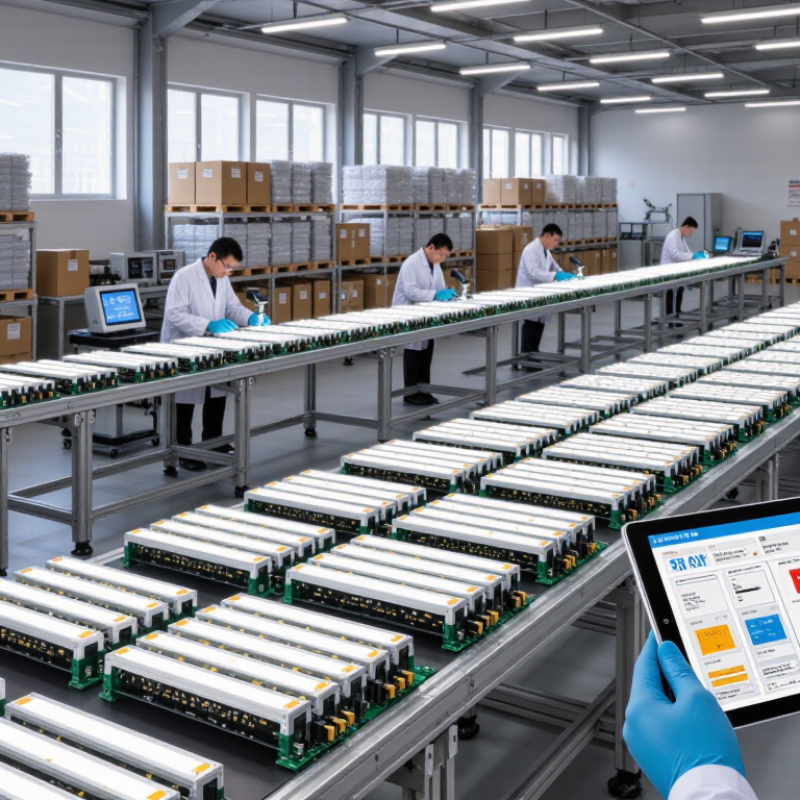
Review manufacturing and communication, too. Ask how PCB quality, soldering, and final inspection are checked. A factory visit or live production video may help, but neither replaces sample testing. Compare lead times and minimum order quantities against your project needs. Even a careful review can miss a weakness; suppliers may also change components without making it obvious. Confirm any approved specifications in writing, and check that repeat orders match the tested sample. The best choice is the supplier that can demonstrate consistent quality and explain its limits plainly.
Choosing a Chinese LED linear module supplier starts with the project conditions, not the catalogue. Define the required length, lumen output, color temperature, dimming method, and operating hours. Then request a sample built with the same LED, driver, and housing proposed for production. Small differences matter. A narrow aluminum channel can run hot and shorten component life.
Ask for LM-80 test data for the LED package and a TM-21 lifetime projection, then check whether the figures match your actual temperature and drive current.
The U.S. Department of Energy’s Energy Saver guidance says LEDs use at least 75% less energy and last up to 25 times longer than incandescent lighting.
That benchmark describes LED technology, not every supplier’s module. Check the test conditions, warranty terms, and replacement policy. I would be cautious of a long lifetime claim without supporting files.
Compare suppliers on more than unit price. Review sample consistency, production lead time, minimum order quantity, driver compatibility, and how they handle failed units. Ask for a small pilot batch and measure brightness, color variation, and heat after several hours. A polished datasheet is useful. It is not proof of stable mass production. Share your installation drawing and target specifications, and ask the supplier to flag any trade-offs in writing.

